


Supporting growers of nutritious specialty crops - fruits, vegetables, nuts and spices
Building Africa’s Voice in the Standards That Shape Food Safety and Trade
What happens when the standards governing food safety do not fully reflect the crops, conditions and data of the people they are meant to serve?
For farmers growing maize, cocoa, spices, sorghum and other specialty crops across Africa, the answer can be significant. Food contaminant standards influence whether crops can safely reach consumers and whether agricultural products can access domestic and international markets. Yet many African countries face gaps in data, laboratory capacity and regulatory expertise that can make it difficult to effectively contribute to the international process that establishes those standards.
That is where the Minor Use Foundation is working to make a difference.
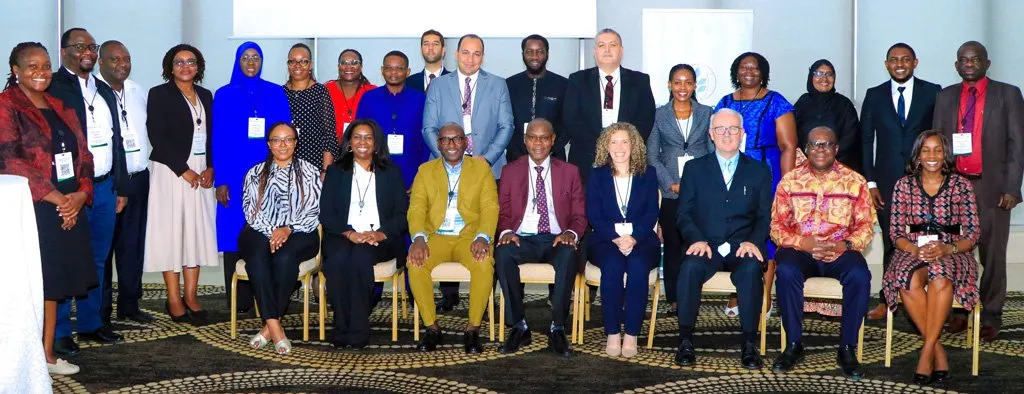
Workshop Overview
In September 2026, the Foundation joined the African Union Inter-African Bureau for Animal Resources (AU-IBAR), FAO/WHO Coordinating Committee for Africa (CCAFRICA) and the Codex Secretariat to convene a two-day workshop in Nairobi that prepared delegates from 12 African countries for the 19th session of the Codex Committee on Contaminants in Food (CCCF19). The goal was straightforward: help African experts move from simply participating in international standard-setting to having the knowledge, evidence, and confidence to shape it.
Why does this matter?
Codex standards are grounded in science and have direct implications for food safety and international trade. Issues discussed in Nairobi included aflatoxin in feed and milk-producing animals, cadmium in cocoa, tropane alkaloids in cereal systems, and lead in spices and blended foods. These are not abstract regulatory issues—they affect crops grown by farmers, foods consumed by families and products traded across borders.
For specialty crops, having the right evidence at the table matters. Fruits, vegetables, herbs, spices, pulses and nuts can be overlooked in international standard-setting because they often have less data and fewer resources behind them than major commodities. The Foundation works to address that gap by building regulatory capacity and helping generate the evidence needed to support science-based decisions.
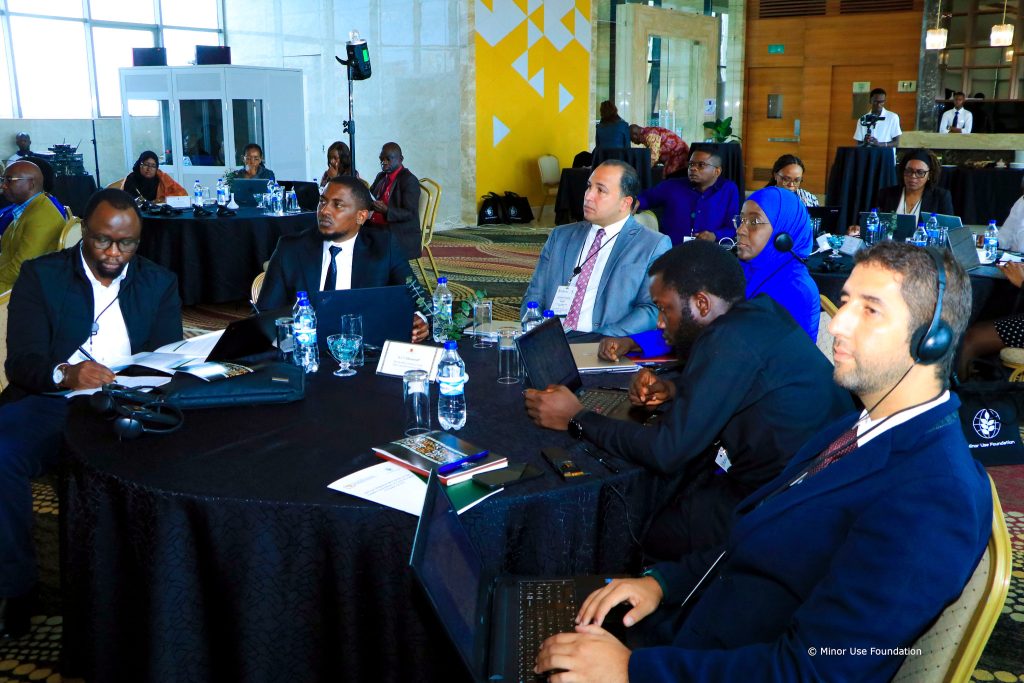
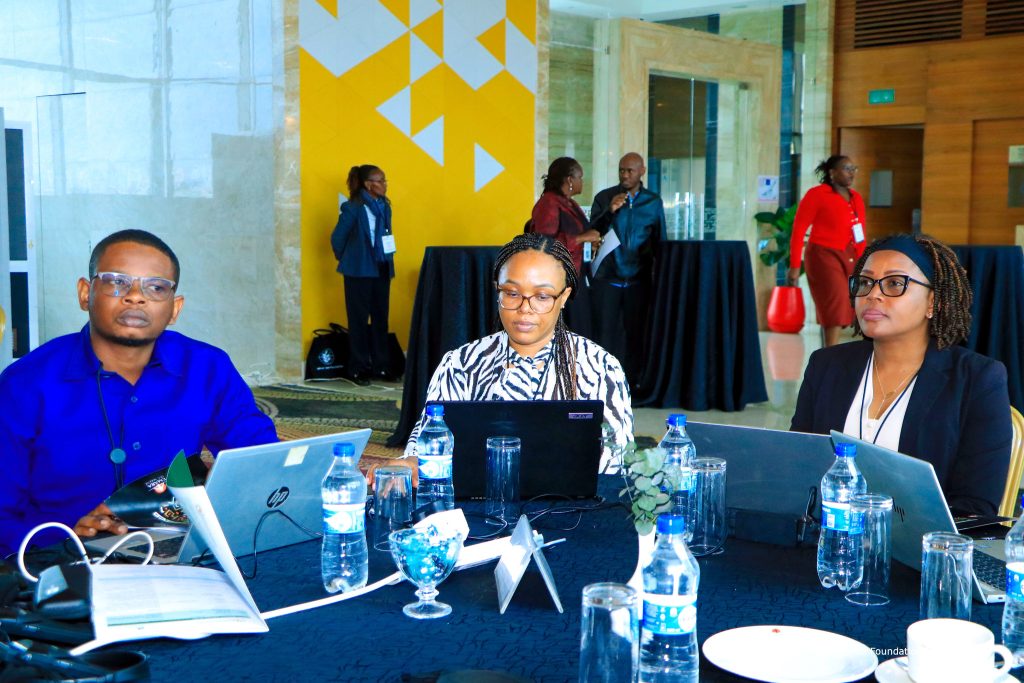
More images from the event are available on Flickr.
From training to impact
The Nairobi workshop was designed to turn technical knowledge into action. Delegates worked through how Codex decisions are developed, how to contribute data and comments, and how to build coordinated national and regional positions. They also identified priority data and laboratory capacity gaps and identified technical inputs that can feed into the African coordination process ahead of CCCF19.
The recommendations went beyond the meeting itself: generate and share African occurrence and exposure data; strengthen laboratory and analytical capacity; engage earlier in Codex working groups; coordinate national positions regionally; and build sustained partnerships among governments, researchers, industry, and international organizations.
That is the kind of systems-level change the Foundation is designed to catalyze.
Who benefits?
- Farmers benefit when science-based standards and stronger food safety systems help protect market access and reduce the risk that compliant products are rejected because standards do not adequately reflect regional realities.
- Consumers benefit from stronger systems for monitoring and managing food contaminants and from greater confidence in the safety of the food supply.
- Governments and regulators benefit from stronger technical capacity, better data and regional networks that enable them to participate more effectively in international standard-setting.
- Markets benefit when standards are science-based, transparent and workable for the diverse crops and production systems that underpin African agriculture and trade.
- And specialty crops benefit when their importance is represented in the places where international decisions are made.
Building capacity. Filling data gaps. Creating lasting change.
The Nairobi workshop reflects a central principle of the Foundation’s Strategic Plan: lasting progress for specialty crop growers requires more than solving individual crop protection problems. It requires strengthening the systems, partnerships, scientific capacity, and regulatory pathways that allow solutions to reach farmers. Our strategy specifically calls for supporting international standard-setting bodies such as Codex, facilitating data sharing, building national capacity and catalyzing public-private partnerships that expand trade in safe, nutritious specialty crops.
The impact is much bigger than a two-day workshop. It is about helping countries build the capacity to generate evidence, make their voices heard and shape the standards that affect their farmers, consumers and agricultural markets. When African expertise and African data are part of the conversation, the resulting standards have a better chance of reflecting African realities—and creating a stronger foundation for safe food, resilient agriculture, and expanded opportunities for specialty crop growers.
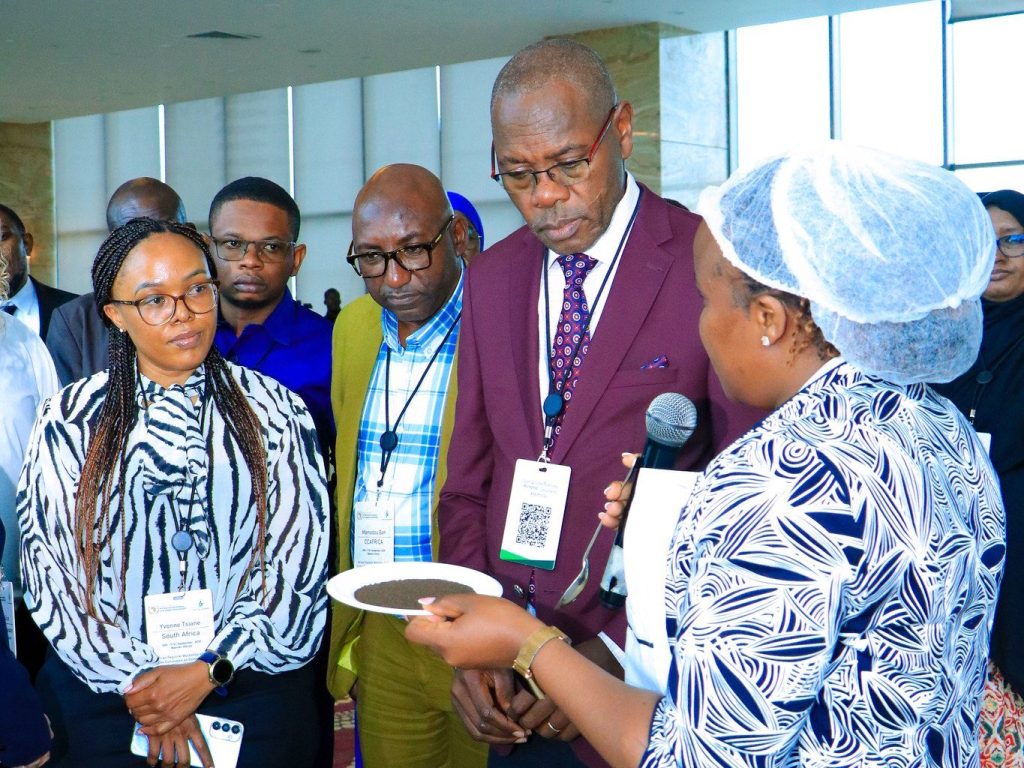
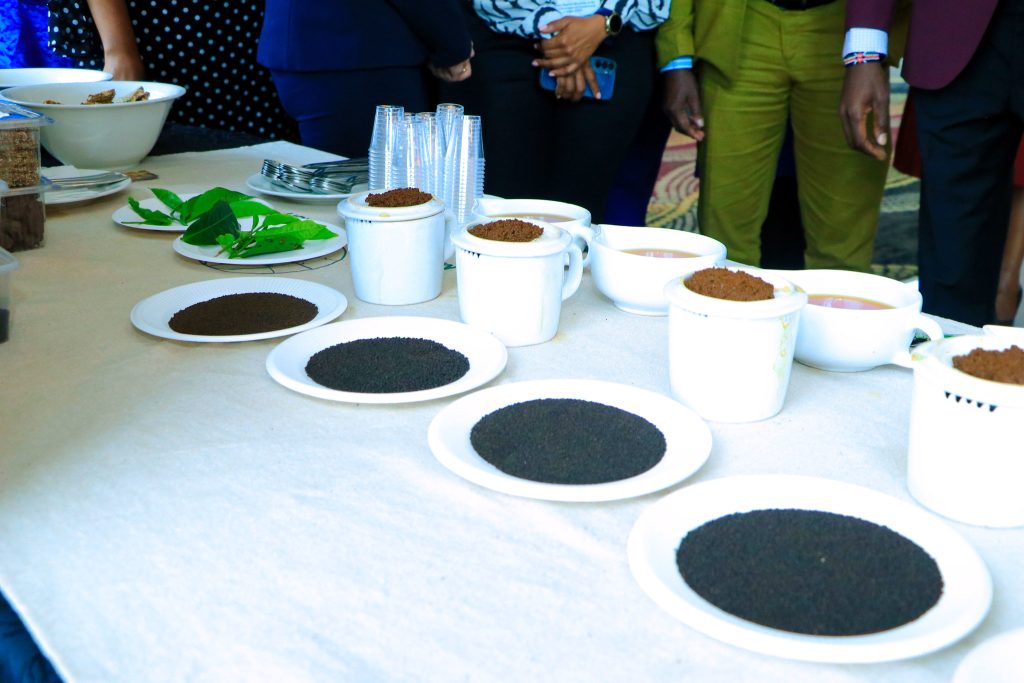
A tea tasting event, led by the CAC Chairperson, Dr. Allan Azegele brought together participants to sample and appreciate the diversity of Kenyan tea, showcasing varieties drawn from the East of Rift (EOR) and West of Rift (WOR) growing regions alongside purple tea and green tea, each reflecting distinct growing conditions and processing methods that shape their character.
Agenda
Click on the day to view the agenda.
Day 1. Wednesday, September 16, 2026
| Time | Activity | Facilitator | Description |
|---|---|---|---|
| 8:30 | Welcome Remarks | Anna Gore, MUF Mamodou Bah, CCAfrica John Oppong, AU-IBAR | Welcoming remarks |
| 8:50 | Official Opening | Allan Azegele – Codex Chairperson | Official opening |
| 9:10 | Africa’s Engagement in CCCF | Mamodou Bah – CCAfrica Chair | Discussion on the challenges in the region; benefits of Codex engagement and the connection to the Codex strategy. |
| 9:30 | Group Photo Tea Tasting, Tea/Coffee & Networking | Minor Use Foundation | Group photo. A group activity to taste a variety of teas from Kenya; socialize and get to know participants. |
| 10:30 | Preliminaries / Workshop Objectives | Mamodou Bah – CCAfrica Chair | Introduction of the workshop’s key deliverable. |
| 10:45 | Foundations of Codex & CCCF / Importance of Delegate Participation | Gracia Briscoe Codex Secretariat – Virtual | Role of Codex in global food safety and trade; mandate and scope of CCCF (chemical contaminants, natural toxins, environmental pollutants); relationship with other Codex committees and international bodies; role of delegates. |
| 11:00 | Codex Procedural Manual and Codex Documentation | Sarah Cahill Codex Secretariat – Virtual | Codex structure & governance; decision making rules; participation and roles; the 8 step standard development process; procedural tools;highlights of the 2026-2031 Codex Strategic Plan. |
| 11:40 | Q&A Session | Anna Gore | Questions on the morning presentations and initial discussion of how national positions are developed and communicated. |
| 11:50 | Navigating Codex Documentation | Steve Crossley | Practical guidance on finding and using Codex documents on the Codex website — where to locate CCCF reports, working documents, circular letters, and JECFA reports. |
| 12:10 | Group Exercise: CCCF Overview & Document Navigation | S. Crossley & M. Kabole | Participants navigate the Codex website to locate CCCF19 working documents and identify key agenda items relevant to their country and potential national positions. |
| 12:50 | Lunch | All | |
| 13:50 | Introduction to the circular letter template | S. Crossley & M. Kabole | The Facilitator introduces the circular letter template. |
| 14:10 | Understanding JECFA’s Risk Assessment | S. Crossley | Overview of JECFA’s work, including hazard identification, hazard characterization, exposure assessment, and risk characterization. |
| 14:30 | Data Submission to JECFA — Overview | S. Crossley | JECFA’s role in Codex risk assessment; types of data required (occurrence, consumption, toxicological); why African country data matters for global evaluations. |
| 14:45 | Aflatoxin Mitigation in Feed Crops | Jane Kamau – IITA, Part 1 S. Crossley & M. Kabole, Part 2 M. Bah & S Crossley, Part 3 | Part 1 — Presentation (20 min): Aflatoxin prevalence in African feed crops (maize, groundnuts, sorghum) and in milk; health and trade implications; current CCCF/Codex standards and JECFA findings; regional mitigation efforts. Part 2 — Q&A & Regional Discussion (20 min): National challenges, detection capacity, alignment with Codex limits; positions African countries should advance at CCCF19. Part 3 — Circular Letter Drafting (20 min): Country groups draft the aflatoxin section – national monitoring capacity, proposal adjustment to Codex limits, and immigration recommendations |
| 15:45 | Tea/Coffee Break & Networking | All | |
| 16:05 | Cadmium Mitigation & the CCCF Code of Practice | Doreen Koranteng- GSA, Part 1 S. Crossley & M. Kabole, Part 2 M. Bah & S Crossley, Part 3 | Part 1 — Presentation (20 min): Code of Practice for prevention and reduction of cadmium contamination in cocoa beans and other commodities; current MLs and JECFA assessment; trade implications for African cocoa-producing countries. Part 2 — Q&A & Regional Discussion (20 min): National monitoring data, mitigation strategies, and gaps; shared regional perspective on cadmium standards. Part 3 — Position Drafting (20 min): Country groups draft the cadmium section of their national position. |
| 17:05 | Day 1 Synthesis & Preview of Day 2 | M. Kabole | Reflection on key themes from the day; reminder to review draft positions overnight; preview of Day 2. |
| 19:00 | Networking group dinner | All |
Day 2. Thursday, September 17, 2026
| Time | Activity | Facilitator | Description |
|---|---|---|---|
| 8:30 | Recap of Day 1 | M Kabole | Summary of Day 1 highlights; overview of Day 2 agenda. |
| 8:40 | Breakout Groups: Reflection & Challenges | S.Crossley & M.Kabole | Country groups review their day 1 draft positions and identify outstanding questions; short discussion on challenges in CCCF engagement. |
| 9:00 | Plenary: Group Findings | S.Crossley & M.Kabole | Groups share reflections. |
| 9:10 | The African Perspective: Engagement in CCCF | Sokhna Ndao – Senegal Ahmed Eltoukhy – Egypt Doreen Sakala – Zambia Ally Kingazi – Tanzania | Country examples of organizing nationally for CCCF engagement; strategies to increase participation and impact (4 countries, 5 minutes each). |
| 9:30 | Q&A Session | M.Kabole | Participants discuss and reflect on the session. |
| 9:40 | Tea/Coffee Break | All | |
| 10:10 | CCCF19 Agenda & 2025 JECFA Issues | M. Bah & S. Crossley | Continental perspective on key issues in the CCCF19 agenda — agenda items 18 and 19 (CX/CF 26/9/1): review of Codex standards for contaminants and the priority list of contaminants for JECFA evaluation. |
| 10:40 | Group work:2025 JECFA position preparation Presentation of group findings | M. Bah & S. Crossley | Delegates prepare preliminary positions developed so far; facilitator highlights areas of regional alignment or divergence; discussion of coordination strategy for CCCF19 and eWG engagement. |
| 11:25 | CCCF/CCAFRICA Coordination and Communication | M. Bah | Expectations for CCCF19; coordination strategies; proposals to raise at the meeting; next steps for inter-session communication and strategic engagement in eWGs. |
| 11:45 | Plenary Discussion & Q&A | A. Gore | Open discussion on any outstanding issues from the morning sessions |
| 12:00 | Lunch Break | All | |
| 13:00 | Standardization of Contaminant Methods — Recent Developments at AOAC International | Katerina Mastovska – AOAC International – Virtual | Recent advances in validated analytical methods and how they are harmonised with international standards to support regulatory enforcement and trade compliance. |
| 13:40 | Tropane Alkaloids | Aziz Mukota – UNBS-Virtual, Part 1 S. Crossley & M. Kabole, Part 2 M. Bah & S. Crossley, Part 3 | Part 1: Presenattion (20min): Tropane alkaloids as food contaminants; contamination pathways via Datura and related Solanaceae weeds in cereal crops. Part 2: Q &A & Regional Discussion (20min): National monitoring capacity, relevant commodities (sorghum, millet, buckwheat and Africa`s interest in the CCCF 19 discussion. Part 3: Country Position Drafting (20 min): Country groups draft the tropane alkaloids section of their position. |
| 14:40 | Tea Break | All | |
| 15:00 | Spice Mixtures & Lead Contamination | Naomi J. Kitur – KEBS, Part 1 S. Crossley & M. Kabole, Part 2 M.Bah & S. Crossley, Part 3 | Part 1: Presentation (20min): Lead contamination in spice mixtures — sources, health risks, trade implications; current CCCF/Codex MLs; global surveillance data and the African context. Part 2: Q &A & Regional Discussion (20min): National monitoring capacity, relevant commodities (sorghum, millet, buckwheat and Africa`s interest in the CCCF 19 discussion. Part 3: Country Position Drafting (20 min): Country groups draft the tropane alkaloids section of their position. |
| 16:00 | Plenary: Sharing & Refining National Positions and Planned Interventions | M. Bah, A. Gore & M. Kabole | Group presentations across all four topics (cadmium, aflatoxins, tropane alkaloids, spices/lead); Plenary feedback to refine and align positions; facilitators highlights consensus and areas for further coordination. |
| 16:30 | Workshop Evaluation | M. Kabole | |
| 16:45 | Closing Session | A. Gore M. Bah J. Oppong | Formal closing; summary of discussions and next steps. |
| 17:00 | End of Programme |
Workshop Report
Questions?
Contact Mellon Kabole, Africa Regional Manager, Minor Use Foundation at [email protected].
Subscribe to Stay Informed!
Please subscribe to our email list. We’ll keep you informed of research projects, Foundation news, events and more.