
A conversation with Sergio Lloreda, leader of the Colombian passionflower exporters’ association, discusses the use of biological tools to control pests and diseases in agriculture, an alternative that seeks to gain ground against pesticides.
By Fernando Nieto Solórzano. Bogotá, July 2023.
“The gulupa industry in Colombia has made a great effort to control the application of pesticides, which in Europe is an increasingly strict matter,” says Sergio Lloreda, president of Avance Pasifloras, which brings together the country’s passionflower exporters. His assessment is based on a scientific certainty of which Lloreda, also general manager of Ocati (exporter of fresh exotic fruits), is fully convinced: the need to increasingly adopt the use of biopesticides and reduce or eliminate the use of pesticides, since the latter are harmful to the grower who applies them, the person who puts the fruit in his mouth, and the health of the environment.
This is how the European Union has understood it, whose regulations regarding the agricultural products it imports are, in this sense, increasingly rigorous, since the Green Pact that has been consolidated there has as one of its main purposes to contribute to a sustainable European economy, a decision through which the continent also seeks to align itself with the rest of the world.
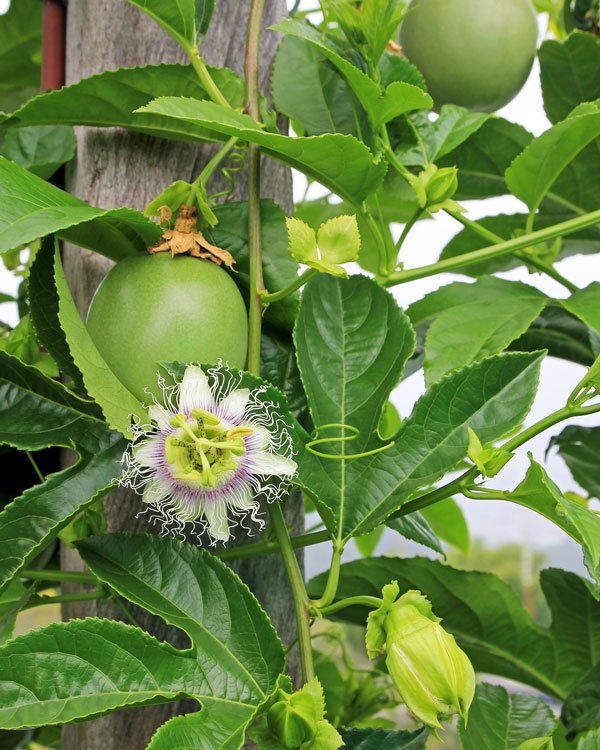
Europe is the main market for Colombian gulupa, the most important passionflower export. There it represents a volume of around 55 million dollars. Thanks precisely to the efforts that have been made to reduce the residues of chemically synthesized pesticides in the final product, Colombian gulupa has recently begun to compete in Europe with gulupa of African origin.
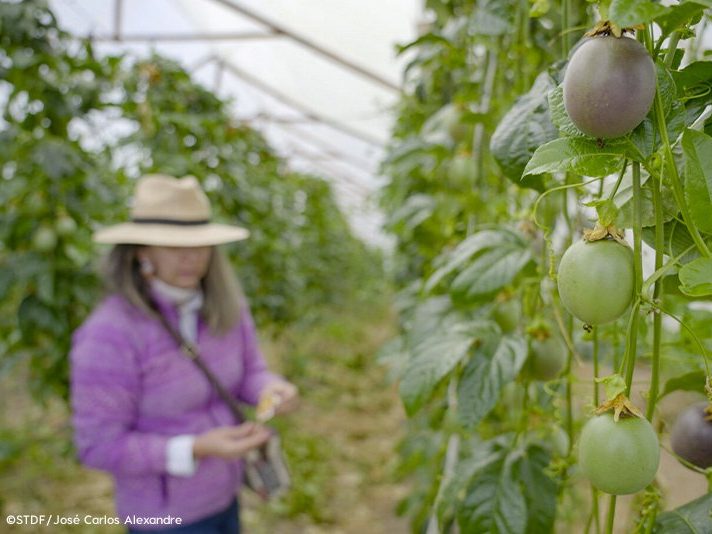
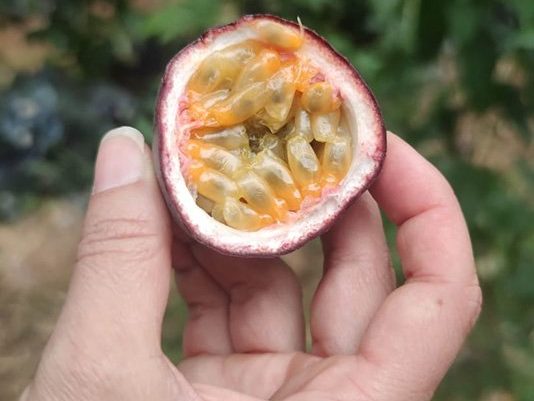
La Urbina farm, belonging to the Ocati company, is a good example of a gulupa crop that has given priority to biological tools when controlling pests and diseases. “One of the objectives of Avance Pasifloras is to find replacements for chemically synthesized molecules. This is also one of the five strategic objectives of the association, which, given the demands of the European market, is completely in line with what project 753 aims to achieve,” says Sergio Lloreda, referring to the initiative for Mitigation of pesticide residues in Latin America through the use of biopesticides, launched at the beginning of 2023 by the Standards and Trade Development Facility (STDF).
What is the traditional way that agronomists in Colombia use to control pests and diseases?
Sergio Lloreda: The grower has three types of tools at his disposal: physical (overgrown crops and ground covers); chemical (pesticides) and biological. In our environment, when a pest or disease is detected, the agronomist is trained to limit himself to the application of pesticide, in an attempt to reduce the pest or eliminate it completely. It is a dualistic model: there is or there is not a pest.
What are the drawbacks of this model?
Sergio Lloreda: When an insecticide is applied, the ecological balance of the crop is damaged, which in turn forces a greater use of agrochemicals. It is a vicious circle. By killing the pest with the biopesticide, the insects that were eating it are also eliminated, which perhaps take longer to reproduce compared to the pest. In this way, the pest population begins to grow faster, but the controlling insects are no longer there. Every living being co-evolves with another that eats it. It is a biological principle whose cycle, it must be said, the human being has broken. Because insects are genetically diverse, some of them survive, despite being in contact with pesticides, transmitting this survival characteristic to the next generation.
What alternatives have been implemented?
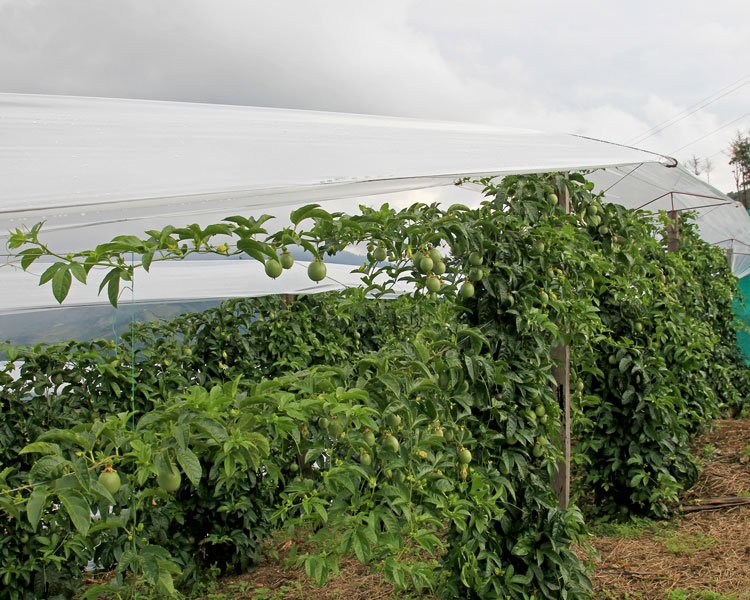
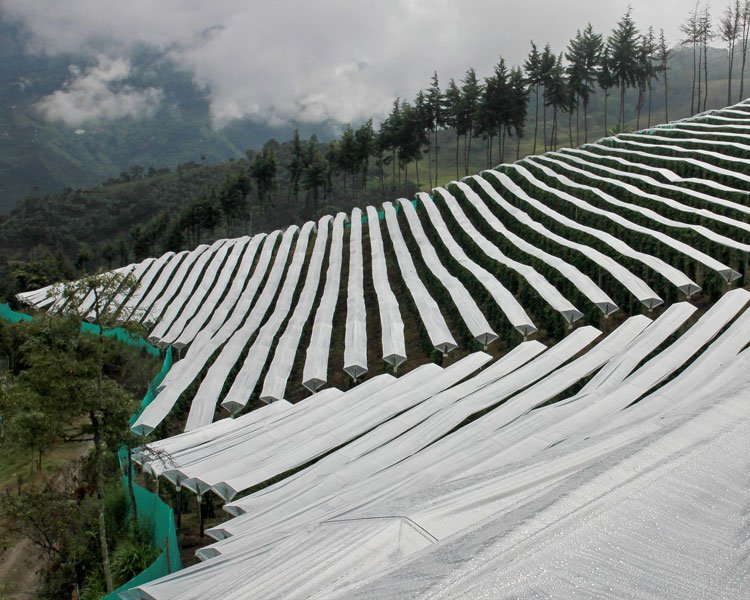
Sergio Lloreda: The philosophy at Ocati is to put a lot of emphasis on physical and biological tools. That is why we have spent many years working on alternatives that are not chemically synthesized, which does not mean that the latter should not be used, but that it is important to find a balance between the three tools. An organic farm like La Urbina , where we have the gulupas, has completely left aside the use of chemical tools and has concentrated its efforts on physical and biological ones, generating knowledge in this regard that is transferred to farmers who cultivate in a conventional way. It is a constant, dynamic learning process. The organic farm has sown a certainty in Ocati, according to which it is possible to control the pests and diseases that attack the gulupa without using chemical synthesis tools and at the same time achieving interesting productivity.
What kind of biological tools has La Urbina put into practice ?
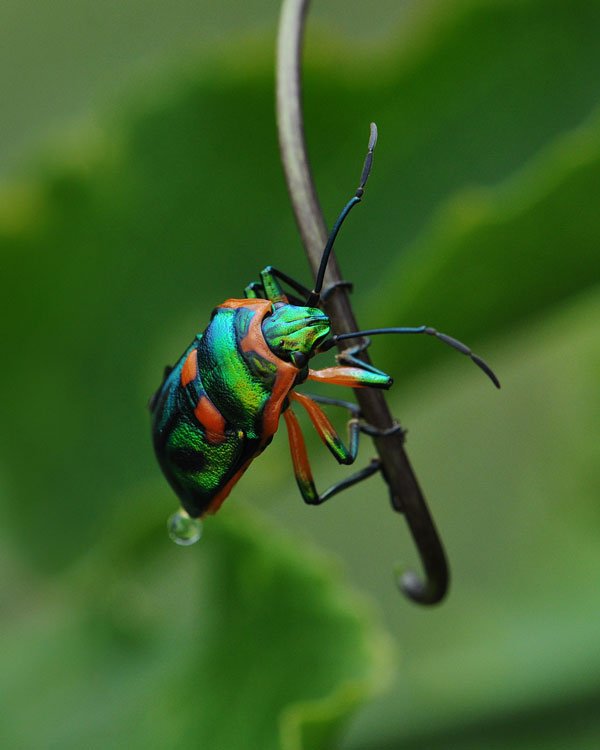
Sergio Lloreda: The demands in Europe have led us to try to get away from the conventional paradigm, to think, if we want to remain in the market, of solutions other than those of chemical synthesis, which is undoubtedly positive. In a country like Colombia, agriculture is much more focused on chemical tools and it is good that Europe is increasingly demanding with residuality controls. In La Urbina there are projects with entomopathogenic insects, those that are introduced into the crop so that they feed on the insect pest. This is the effort that is being made with orius to attack thrips and thus achieve an ecological balance in the crop.
How would you summarize the benefits of biological tools?
Sergio Lloreda: The organic farming model seeks balance, coexistence, without trying to eradicate the pest, but rather by promoting the existence of insects that eat other insects, until reaching the ecological balance that exists in a mature forest. However, the biological aspect is more difficult to quantify. For example, how many predatory insects, once released, have an effect on the pest? It is very difficult to know. The method for implementing the biological model is much more intuitive.
What is the main challenge that Colombia must face when undertaking the transition to a pest control model using physical and biological tools?
Sergio Lloreda: The main challenge is to break the paradigm of pesticide use, proposed by the Green Revolution, which has generated benefits and also disadvantages. The task of dismantling it begins with the fact of accepting that the current model of agriculture has major flaws that in general terms do not make it sustainable, since it is not possible to have, without problems, a conventional crop for many years. In gulupa, for example, it is necessary to leave the farm, since the pressure of pests and diseases and the deterioration of the soil due to the application of so many agrochemicals is such that it is impossible to remain for more than three cycles. The transition requires a cultural change and a change in the productive model, which is not easy to implement, since in agriculture the trials are incredibly expensive and require a lot of time. Until a strong incentive is created for farmers so that they begin to grow crops with low residuals (after all, the national market buys the fruit at the same price, with or without residuals), the traditional paradigm that uses pesticides will continue to prevail.
What other aspects can be highlighted in the implementation of the pest and disease control model focused on biological tools?
Sergio Lloreda: The microorganisms that are part of biological tools adapt to their ecological environment, so that the solutions that have a real impact on the world of biology would be of a local nature, which requires investment in that place, research, observation, time. This does not mean that the large pesticide companies are not capable of doing so, but they would have to proceed from the operation of local offices, without a business model as scalable as that of pesticides, which are economically very profitable. And the specific responses for each area would not be as profitable, since they would have to develop solutions for specific agroecological conditions.
Does the paradigm of biological tools then have a vulnerable side?
Sergio Lloreda: Care must be taken not to deify any technology. For example, it is perfectly feasible to create in a laboratory a highly aggressive organism to eliminate thrips that also ends up eliminating bees and bumblebees and ladybirds… the rest of the beneficial insects. Although the paradigm based on biological tools offers promising prospects, it is not advisable to become overly enthusiastic and assume that one technology necessarily corrects another technology.