


CRISPR and Emerging Technologies
to Address HLB/Citrus Greening:
A Multi-Stakeholder Approach
October 1-2, 2024 | Sao Paulo, Brazil
The Minor Use Foundation convened a workshop on one of the most serious citrus diseases in the world – Huanglongbing (HLB) also know as citrus greening – on October 1-2, 2024, in Sao Paulo, Brazil.
Workshop Recordings
“Fighting HLB in Citrus Fruits through Genetic Editing” presented by Dr. Vivian Irish, the Daniel C. Eaton Professor of Molecular, Cellular and Developmental Biology at Yale University
“Combating HLB Using Viral Vectors to Express Antimicrobial Peptides” presented by Rafael Simon, Co-Founder and President of Silvec Biologics
“AI-Driven Solutions for Mitigating HLB in Citrus: Innovative Technologies and Approaches” presented by Dr. Ampatzidis Yiannis, Associate Professor at the Department of Agricultural and Biological Engineering, University of Florida
“Citrus Greening (HLB) Detection using Ground, Airborne and Satellite Imaging” presented by Dr. Won Suk “Daniel” Lee, Professor in the Agricultural and Biological Engineering Department at the University of Florida
About the Workshop
Addressing this complex challenge requires a multi-stakeholder approach that involves collaboration among growers, regulators, industry leaders, and researchers. By pooling resources and expertise, we can develop more sustainable and cost-effective strategies to mitigate the impact of citrus greening disease and ensure the long-term viability of the citrus industry.
This workshop does not aim to present new research findings or solutions. Rather, it aims to share information about the current state of research with a specific focus on promising results in plant genetics, and explore the regulatory hurdles to uptake of this solution. It will also explore best practices in mitigating HLB and discuss next steps for international collaboration in combating this devastating disease.
Agenda
September 30, 2024
Reception Dinner
Barbacoa Restaurant Sheraton WTC Hotel
6:30-8:00 pm
October 1, 2024
SHERATON SAO PAULO WTC HOTEL
Nações Unidas Ave 12559, Brooklin Novo,
Sao Paulo, Sao Paulo, Brazil, 04578-903
Room Matisse on the Mezzanine Level
| Time | Agenda | Facilitator |
|---|---|---|
| 7:30 – 8:30 am | Registration of Participants | Minor Use Foundation (MUF) |
| 8:30 – 8:50 am | Welcome and Setting Stage | Adriana Castañeda, MUF |
| 8:50 – 9:30 am | Perspectives of HLB from Different Regions | Andrea Ramos Andean Community of Nations Juan Salvador Torres, AVA/ASAJA Daniel Kovich, USDA/FAS, New Technologies Division, Trade Policy and Geographic Affairs |
| 9:30 – 10:30 am | Controlling HLB: Evolution of Biotechnological Solutions and Recent Advances | Dean Gabriel, University of Florida Vivian Irish, Yale University Rafael Simon, Silvec |
| 10:30 – 11:00 am | Group Picture and Coffee Break | |
| 11:00 -12:40 pm | Regulatory Approvals: Current Product Pipeline, Approval Process, and Obstacles | Yianni Lagos, Solicea Bill Barney, MUF José Maria Castilla, AVA/ASAJA Kara Welch, US EPA Biopesticides and Pollution Prevention Division Jason Dietz, Biotechnology Coordinator, CFSAN – FDA |
| 12:40 – 1:10 pm | Q&A Session | |
| 1:10 – 2:15 pm | Lunch Break – Gaugin Room | |
| 2:15 – 3:00 pm | Imaging Techniques to Detect HLB in Citrus AI-Driven Solutions for Mitigating HLB in Citrus: Innovative Technologies and Approaches AI Powered Optimization Platform for Leading Agribussiness | Wonsuk Lee, University of Florida Yiannis Ampatzidis, University of Florida Dennis Silveira, SeeTree |
| 3:00 – 3:45 pm | Q&A session | |
| 3:45 – 4:15 pm | Coffee Break | |
| 4:15 – 5:00 pm | Conclusions and Closing | MUF |
October 2, 2024
| Time | Agenda | Facilitator |
|---|---|---|
| 8:00 am | Depart Sheraton Sao Paulo WTC Hotel | |
| 11:00 am – 12:30 pm | Lunch at Fundecitrus Facility | Fundecitrus |
| 1:15 – 4:00 pm | Field Tour at Fundecitrus | Fundecitrus Araraquara |
| 4:00 – 5:00 pm | Fundecitrus Presentation and Technical Discussion | Fundecitrus MUF |
| Stay overnight at Hotel Araucaria Flat |
About HLB/Citrus Greening
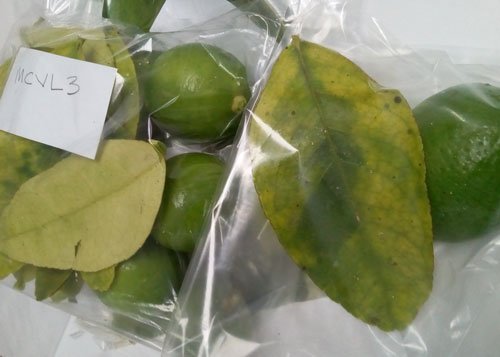
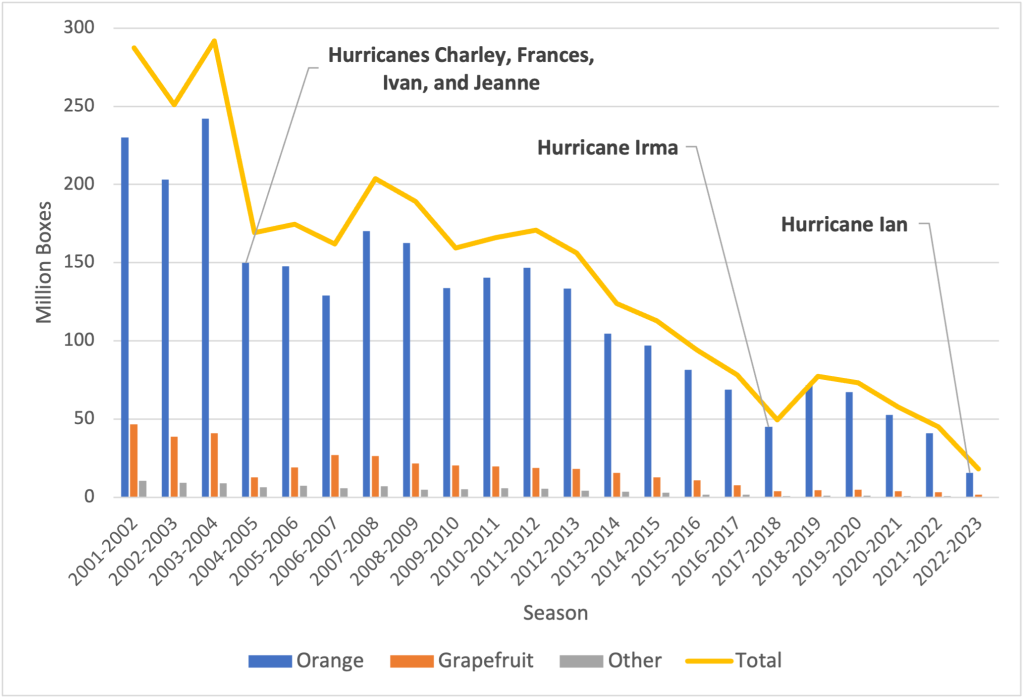
Citrus greening, now called Huanglongbing (HLB), is a disease of citrus plants caused by Candidatus Liberibacter spp. It is one of the most serious citrus diseases in the world. Once infected, most trees die within a few years. Originally thought to be caused by a virus, it is now known to be caused by unculturable phloem-limited bacteria. There are three species of HLB that have been described. The African form produces symptoms only under cool conditions and is transmitted by the African citrus psyllid Trioza erytreae, while the Asian form prefers warmer conditions and is transmitted by the Asian citrus psyllid Diaphorina citri. Recently a third American form transmitted by the Asian citrus psyllid was discovered in Brazil. These emerging diseases are also a huge barrier for the growers, exporters and processing industries. Reports suggest there is approximately 75% decline in orange production in Florida due to HLB infection.
Florida Citrus Production, Boxes (2001-23)
Mitigation Measures
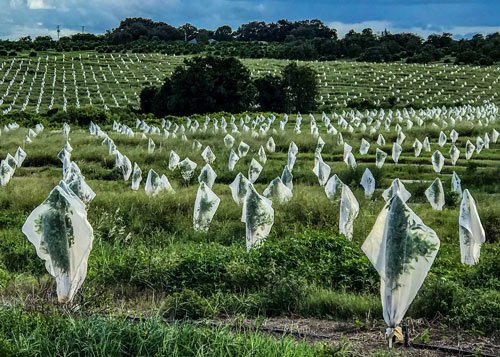
Due to the devastating nature of the disease, there has been a massive amount of effort and research devoted to HLB, exploring options to mitigate the citrus greening by breeders, biotechnologists and other agricultural scientists. There has been extensive research into nutritional supplements, reflective mulch, heat treatments, insecticides, and bactericides to combat citrus greening disease. Efforts are also underway to breed greening-resistant trees, and some growers have adopted preventive measures by cultivating their citrus under protective screens. However, these practices necessitate significant financial investment, and a low-cost, comprehensive solution to HLB is still lacking.